
 Facial Aesthetics
  Body Contouring
  Skin Rejuvenation
  Eye & Eyelid Surgery
  Mummy Makeover
  Obesity Treatment
  Dental Aesthetics
  Hair Transplant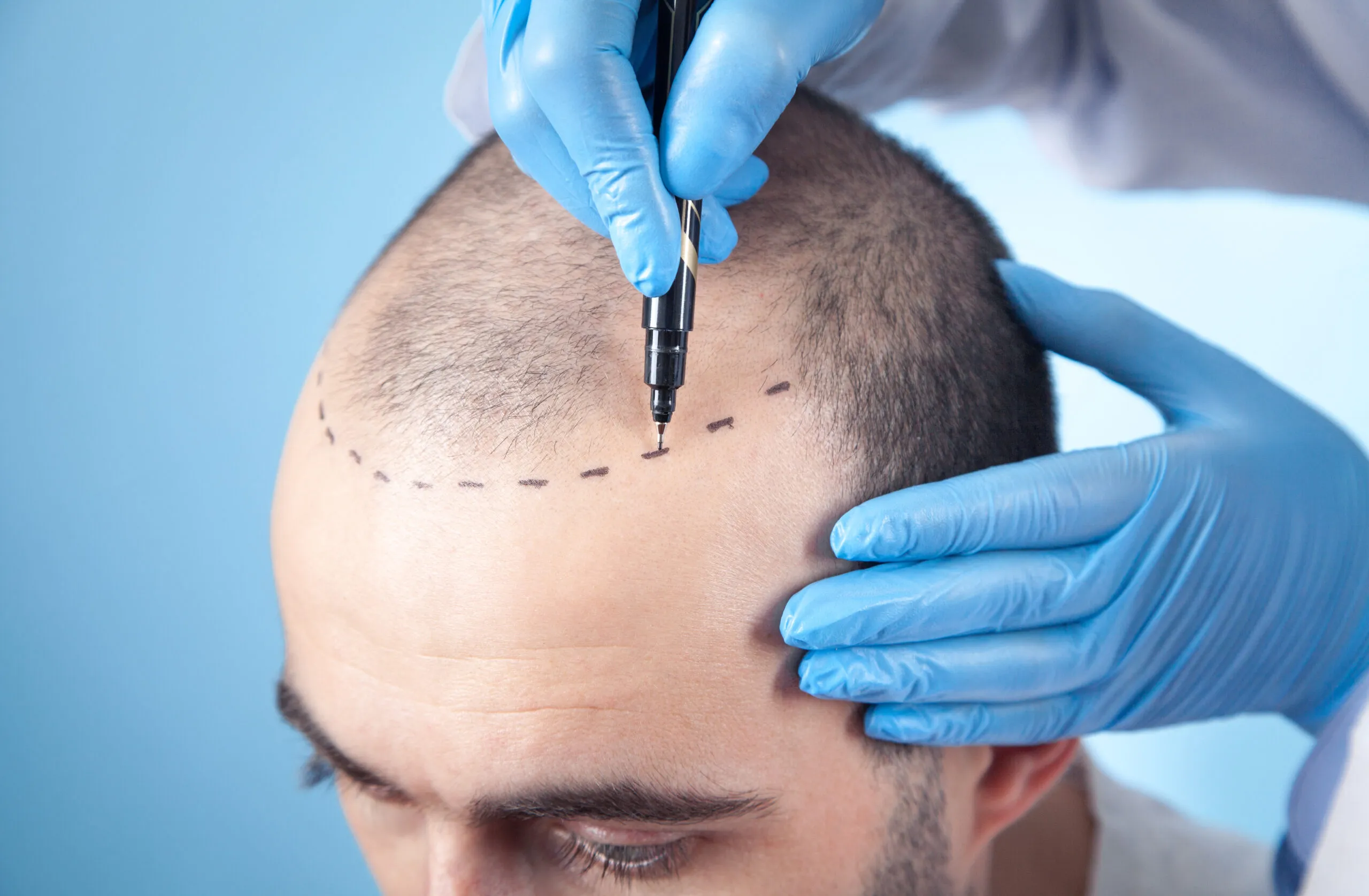
PRP (platelet-rich plasma) therapy and hair mesotherapy are non-surgical treatments in which concentrated platelets from your own blood, or a blend of vitamins and nutrients, are injected into the scalp to support thinning hair. They are typically used in the early stages of hair loss, or alongside a hair transplant to support healing and the surrounding native hair. Because there are no incisions, sessions are short and most people return to their day straight away — though a course of several sessions is usually needed, and neither treatment can restore follicles that have already been lost.
Is this treatment right for you?
Suitable for: men and women in the early stages of thinning who still have active follicles, or transplant patients who want to support healing and their existing hair.
Less ideal if: you have advanced baldness with few remaining follicles, a blood or platelet disorder, take blood-thinning medication that cannot be paused, or have an active scalp infection.
Suitability can only be confirmed by a qualified clinician after assessing you, which is why every plan begins with a free, personalised review rather than a fixed promise.
Benefits & risks
A balanced view matters more than a sales pitch. Weigh both sides and discuss them with a clinician before deciding.
Potential benefits
- Non-surgical, with no incisions, stitches or general anaesthetic
- Short sessions with little to no downtime — most people return to their day straight away
- PRP uses your own blood, so the risk of an allergic reaction is low
- May improve hair thickness and reduce shedding in early thinning, though responses vary
- Can be combined with a hair transplant to support healing and the surrounding native hair
- Injection marks typically settle within a day or two, with no scarring expected
Risks & considerations
- Tenderness, redness, swelling or bruising at the injection sites for a day or two
- Headache, itching or a feeling of tightness in the scalp after a session
- Temporary shedding before any improvement becomes visible
- Infection at the injection sites, which is rare when sterile technique is used
- Allergic reaction to mesotherapy ingredients, which is uncommon but possible
- A limited or absent response — neither treatment works for everyone, and lost follicles cannot be revived
Am I a candidate?
- You are in the early stages of hair thinning and still have active, weakening follicles
- You want a non-surgical option to support hair quality before considering a transplant
- You have had, or are planning, a hair transplant and want supportive treatment for the grafts and surrounding hair
- You are in good general health, with no blood-clotting disorder or active scalp condition
Only a qualified clinician can confirm suitability after a personal assessment.
Process & recovery
PRP and mesotherapy sessions are quick outpatient appointments, typically lasting under an hour. For PRP, a small blood sample is taken and spun in a centrifuge to concentrate the platelets, which are then injected into the scalp as a series of micro-injections; mesotherapy delivers a blend of vitamins and nutrients in the same way. A numbing cream may be applied for comfort, and no general anaesthetic is needed. Most people return to normal activities the same day, and a course of several sessions spaced weeks apart is usual, with maintenance afterwards. Risks include tenderness, redness, bruising, headache, temporary shedding and, rarely, infection — and results vary from person to person.
What are PRP and hair mesotherapy?
PRP (platelet-rich plasma) therapy and hair mesotherapy are the two most widely used non-surgical injection treatments for thinning hair, and UK patients often consider them either as an early intervention or as support around a hair transplant. PRP is prepared from your own blood: a small sample is taken from the arm and spun in a centrifuge to separate and concentrate the platelets, which naturally carry growth factors involved in tissue repair. When this concentrated plasma is injected into the scalp, the aim is to encourage weakened, shrinking follicles to produce thicker, healthier hair.
Hair mesotherapy takes a different approach. Rather than using your own plasma, it delivers a tailored blend of ingredients — typically vitamins, minerals, amino acids and hyaluronic acid — into the middle layer of the scalp skin through a series of very fine micro-injections, with the aim of nourishing the follicles and improving the scalp environment.
It is important to be honest about the evidence. Research into both treatments is ongoing: many patients report reduced shedding and improved thickness, but responses vary considerably, published studies use different protocols, and neither treatment is a cure for hair loss. Crucially, both work only where living follicles remain — they cannot revive follicles that have already been lost, which is why fully bald areas need a transplant such as FUE instead.
How PRP and mesotherapy work
Both treatments follow a similar in-clinic pattern:
- Assessment. The scalp is examined, and your pattern of thinning, medical history and medication are reviewed to confirm suitability.
- Preparation. For PRP, blood is drawn and centrifuged for several minutes; for mesotherapy, the injection blend is prepared for your needs.
- Injection. A numbing cream may be applied, then the solution is placed across the thinning areas in a grid of shallow micro-injections. A session typically takes well under an hour.
- Course and maintenance. Several sessions spaced a few weeks apart are usual, followed by maintenance sessions at longer intervals.
| PRP | Hair mesotherapy | |
|---|---|---|
| What is injected | Concentrated platelets from your own blood | A blend of vitamins, minerals, amino acids and similar ingredients |
| How it may help | Growth factors may stimulate weakened follicles | Nutrients aim to nourish follicles and the scalp |
| Allergy risk | Low, as the material is your own | Uncommon, but possible with some ingredients |
Some clinicians combine the two, or use them alongside medical treatments for hair loss. The treating doctor advises which approach — if any — suits your pattern of thinning.
Recovery: what to expect
Recovery from PRP and mesotherapy is short, but the general pattern is worth knowing:
| Stage | What is typical |
|---|---|
| First 48 hours | Mild redness, tenderness, small bumps or light bruising at the injection sites; hair washing and heavy exercise are usually paused briefly |
| First 1–2 weeks | The scalp settles fully; normal routines, exercise and styling resume as advised |
| 1–3 months | Further sessions in the course take place; reduced shedding is often the first change noticed |
| Longer term | Any improvement in thickness builds gradually; maintenance sessions help sustain the effect |
Serious problems are rare, but spreading redness, increasing pain or other signs of infection should always be reported promptly.
Results and longevity
Expectations should be realistic. When PRP or mesotherapy helps, the change is typically a gradual improvement in hair quality — less shedding and better thickness in thinning areas — rather than dramatic regrowth, and it usually takes three to six months before the result can be fairly judged. Neither treatment is permanent: the underlying causes of hair loss continue, so maintenance sessions every few months are generally needed to hold the benefit, and hair tends to drift back towards its previous pattern if treatment stops. Some people respond well; others see little change. Where thinning is advanced, these treatments are usually discussed as support around a transplant rather than an alternative to one.
Having PRP and mesotherapy in Türkiye
As a medical travel facilitator, we coordinate PRP and mesotherapy at accredited, Ministry of Health–authorised partner hospitals and clinics in Türkiye. Because a single session is quick, these treatments are most often arranged as part of a wider plan — commonly alongside a hair transplant, where they may support healing and the surrounding native hair — rather than as a stand-alone reason to travel. Your photographs and medical history are reviewed first, so the treating doctor can advise honestly whether injections, a transplant or a combination is appropriate for you, and you receive a free, no-obligation personalised treatment plan.
Packages are all-inclusive and transparent, typically covering treatment, hotel accommodation, airport and clinic transfers and an English-speaking patient coordinator who supports you throughout your stay; the patient journey page explains each stage. After you return to the UK, follow-up continues remotely with photo reviews, and your plan sets out how any remaining sessions in a course can be scheduled — whether on a return visit or with maintenance arranged at home.
This page is for general information and is not a substitute for personalised medical advice; suitability can only be confirmed after an individual assessment.
Before & after
Frequently asked questions
Is PRP a substitute for a hair transplant? +
No — PRP therapy supports existing, weakened hair follicles rather than replacing follicles that have already been lost. Where an area is fully bald, a hair transplant such as FUE or DHI is the only way to restore coverage. Many patients use PRP alongside a transplant to support healing and the surrounding native hair.
How many PRP or mesotherapy sessions will I need? +
A course of several sessions spaced a few weeks apart is typical for both PRP and hair mesotherapy, followed by periodic maintenance sessions to sustain the effect. The exact number depends on the degree of thinning and how your scalp responds. The treating doctor sets out a schedule in your personalised plan.
Is there any downtime after PRP or mesotherapy? +
There is little to none — most people return to work and normal activities straight after a PRP or mesotherapy session. Mild redness, tenderness or small bumps at the injection sites usually settle within a day or two. You will typically be asked to avoid washing your hair, heavy exercise and saunas for a short period afterwards.
Is PRP for hair painful? +
PRP injections can cause brief stinging or pinching, but a topical numbing cream is usually applied first and most people find sessions tolerable. The scalp may feel tender or tight for a day or so afterwards. Comfort levels vary from person to person.
How long does PRP for hair loss last? +
The effects of PRP for hair loss are not permanent: improvements in thickness and shedding typically need maintenance sessions every few months to be sustained. How long each course holds varies with the cause of your thinning, your age and your general health. Without maintenance, hair tends to gradually return towards its previous pattern.
When will I see results from PRP or mesotherapy? +
Any response to PRP or mesotherapy typically builds gradually, with reduced shedding often noticed first and changes in thickness taking several months. Because hair grows slowly, judging the result fairly usually takes at least three to six months from the start of a course. Some people respond well while others see little change, so an honest assessment beforehand matters.
How long do I need to stay in Türkiye for PRP or mesotherapy? +
A single PRP or mesotherapy session takes under an hour, so on its own it fits easily into a short stay of a day or two; most patients have it during a trip arranged for a hair transplant, which typically means three to four days in total. Because a full course involves several sessions, your plan may combine treatment in Türkiye with maintenance at home. Your free personalised plan confirms the exact schedule.
When can I fly home after PRP or mesotherapy? +
You can typically fly home the same day or the day after a PRP or mesotherapy session, as these are non-surgical treatments with no general anaesthetic and little downtime. If your session is combined with a hair transplant, the transplant recovery guides the travel advice instead. Your personalised plan sets out the recommendation for your case.