
 Facial Aesthetics
  Body Contouring
  Skin Rejuvenation
  Eye & Eyelid Surgery
  Mummy Makeover
  Obesity Treatment
  Dental Aesthetics
  Hair Transplant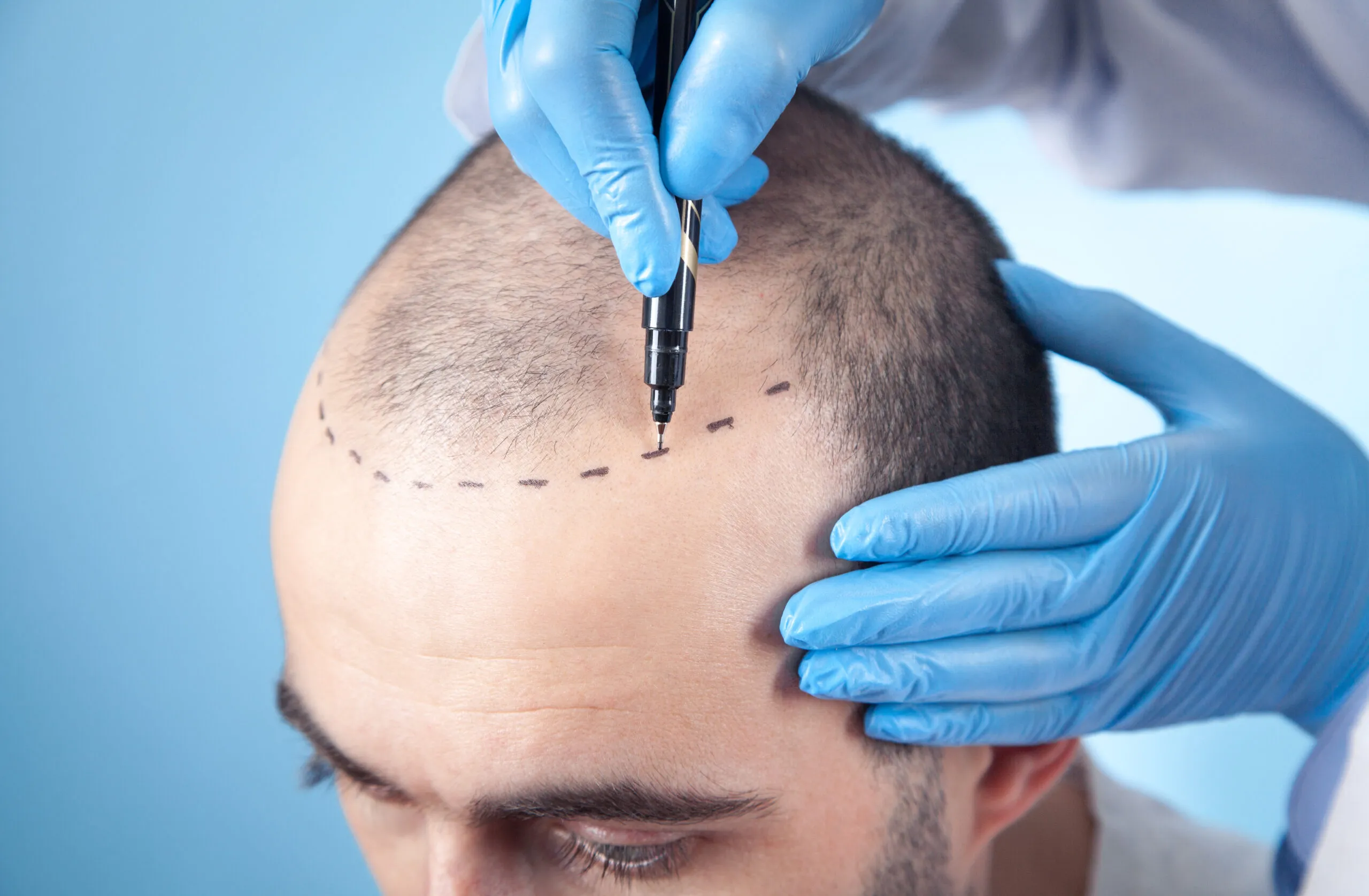
A beard transplant is a procedure that moves hair follicles, usually from the back of the scalp, to the beard, moustache, sideburns or chin to fill patchy growth or build a fuller, more defined beard. It is performed using FUE or DHI techniques under local anaesthetic, with each graft placed to follow the natural angle and direction of facial hair. It suits men whose beard growth is thin, patchy or absent — whether for genetic reasons or because of scarring — and who have a healthy donor area.
Is this treatment right for you?
Suitable for: men with patchy, thin or absent facial hair — including gaps caused by scarring — who have a healthy scalp donor area.
Less ideal if: you have an active skin condition in the beard area, expectations of very high density, or a limited donor supply that may be better reserved for the scalp.
Suitability can only be confirmed by a qualified clinician after assessing you, which is why every plan begins with a free, personalised review rather than a fixed promise.
Benefits & risks
A balanced view matters more than a sales pitch. Weigh both sides and discuss them with a clinician before deciding.
Potential benefits
- Can fill patchy areas, connect the moustache to the chin, or build density across the cheeks and jawline
- Grafts are placed individually to follow the natural angle and direction of facial hair growth
- Performed under local anaesthetic in a single day, with no linear donor scar when FUE or DHI is used
- Transplanted hair is your own, so its colour and texture blend with the existing beard
- Can help disguise acne scars or scars from injury where the skin quality is suitable
- Results are typically long-lasting, as donor hair tends to be resistant to hair loss
Risks & considerations
- Swelling, redness and pinpoint crusting in the beard area during the first week
- Ingrown hairs and folliculitis (inflamed follicles) as new hairs grow through
- Temporary numbness or tingling in the face or donor area
- Small pale dot marks in the donor area and, rarely, visible marks on the face
- Uneven density, asymmetry or a growth direction that may need a touch-up procedure
- Infection or bleeding, which are uncommon and usually treatable
Am I a candidate?
- You have patchy, thin or absent beard growth that has been stable for some time
- You have a healthy donor area at the back or sides of the scalp
- You are in good general health and have realistic expectations about achievable density
- You want to disguise a facial scar where the skin is suitable for grafting
Only a qualified clinician can confirm suitability after a personal assessment.
Process & recovery
A beard transplant is a single-day procedure performed under local anaesthetic, typically taking several hours depending on the number of grafts. Follicles are extracted individually from the scalp donor area and implanted one by one at the natural angle of beard growth. Tiny crusts settle within about a week, transplanted hairs shed at two to four weeks — which is normal — and new growth appears from around three to four months, maturing over up to a year. The main risks include swelling, redness, ingrown hairs, folliculitis, small donor-area marks, temporary numbness and, rarely, infection or uneven growth.
What is a beard transplant?
A beard transplant restores or builds facial hair using your own follicles, and it has become one of the most frequently requested hair restoration procedures among UK men considering treatment abroad. Patchy beard growth is common and often simply genetic, but it can also follow scarring from acne, surgery, burns or injury, or earlier laser hair removal. Because facial hair frames the mouth and jawline, even a modest improvement in density can noticeably change how a beard looks — whether the aim is to close small gaps, connect the moustache to the chin, extend the sideburns or create a full beard where little grows naturally.
The design stage is arguably the most important part of the procedure. Beard hair grows at sharp, varied angles that change across the face — flatter on the cheeks, steeper around the chin and moustache — so the treating surgeon maps the beard line to suit your face shape and plans each graft to follow these natural angles. Density expectations are discussed honestly at this stage: the number of grafts your donor area can safely supply sets a practical limit, and a natural distribution generally matters more than maximum thickness.
How a beard transplant works
A beard transplant in Türkiye is typically completed in a single session under local anaesthetic, and the day follows a clear sequence:
- Design and marking. The beard line, target areas and graft distribution are drawn while you sit upright, and agreed with you before anything begins.
- Donor extraction. Follicles are removed individually from the donor area — usually the back of the scalp — using a micro-punch, so there is no linear scar.
- Implantation. Each graft is placed at the flat, acute angle typical of facial hair, following the direction of your natural growth.
Two implantation techniques are commonly used:
| Technique | How grafts are placed | Often chosen when |
|---|---|---|
| FUE | Small channels are opened first, then grafts are inserted | Larger areas of cheek or jawline are being covered |
| DHI | Grafts are loaded into an implanter pen and placed in one step | Precise angle control matters most, as around the moustache and beard line |
Neither technique is universally better. The treating surgeon recommends an approach — sometimes a combination of both — based on the areas being treated, your skin and the density planned.
Recovery: what to expect
Recovery varies from person to person, but the general pattern is consistent:
| Stage | What is typical |
|---|---|
| First 48 hours | Redness, mild swelling and pinpoint crusts around each graft; the area is kept dry and untouched as instructed |
| First 1–2 weeks | Crusts lift with gentle washing from around day three; many men return to work within a few days, though the area stays visibly pink at first |
| 1–3 months | Transplanted hairs shed at two to four weeks — normal and temporary — before early regrowth begins from around month three |
| Longer term | Density builds steadily; trimming and, later, shaving are reintroduced once healed, with mature results typically by twelve months |
During the first week or two you will usually be asked to sleep on your back, avoid touching or scratching the grafts, and stay away from heavy exercise, saunas and swimming until the treating surgeon confirms it is safe. Ingrown hairs and small spots (folliculitis) can appear as new hairs push through and usually settle, but spreading redness, fever or worsening pain should always be reported promptly.
Results and longevity
Because donor follicles from the back of the scalp tend to keep their original characteristics, the results of a beard transplant are typically long-lasting, and the new hairs can usually be shaved, trimmed and styled like the rest of the beard once healed. It is worth understanding the honest limits, too: scalp hair can differ slightly in texture from native beard hair, small variations in density or direction can persist, and a minority of patients later choose a second session to refine coverage or add density. Final results emerge gradually — the beard you see at three months is not the beard you will have at twelve — so patience is part of the process.
Having a beard transplant in Türkiye
As a medical travel facilitator, we coordinate beard transplants at accredited, Ministry of Health–authorised partner hospitals and clinics in Türkiye. Before you commit to anything, your photographs, medical history and goals are reviewed so the treating surgeon can advise whether a beard transplant is genuinely appropriate for you — and how many grafts your donor area can realistically support — and you receive a free, no-obligation personalised treatment plan.
Packages are all-inclusive and transparent, typically covering the procedure, hotel accommodation, airport and clinic transfers, aftercare products and an English-speaking patient coordinator who supports you throughout your stay; you can read how each stage works on our patient journey page. Before you fly home, the grafts are checked and the first wash is demonstrated, and after your return to the UK follow-up continues remotely with photo updates and direct access to the medical team while the new beard grows in.
This page is for general information and is not a substitute for personalised medical advice; suitability can only be confirmed after an individual assessment.
Before & after
Frequently asked questions
Will a beard transplant look natural? +
A well-planned beard transplant is designed to blend in: grafts are placed one by one to match the angle, direction and density of your existing facial hair, and the beard line is mapped to suit your face shape. Because the transplanted hair is your own, its colour and texture match the surrounding beard. Results vary from person to person, which is why the design stage matters so much.
Is a beard transplant painful? +
A beard transplant is carried out under local anaesthetic, so the procedure itself is not usually painful — most people describe pressure rather than pain. Afterwards, mild soreness, tightness and swelling are common for a few days and are typically manageable with simple pain relief. Comfort levels vary between individuals.
Can I shave after a beard transplant? +
Yes — once the grafts have healed securely you can shave, trim and style the transplanted beard like the rest of your facial hair. Most surgeons advise waiting several weeks before shaving over the grafted area, and often longer before a close wet shave. The treating surgeon confirms the right timing for your case.
When will I see results from a beard transplant? +
Transplanted hairs typically shed two to four weeks after a beard transplant, which is a normal part of the growth cycle. New growth usually appears from around three to four months, with density building steadily and mature results typically visible by around twelve months. Timelines vary between individuals.
How long does a beard transplant last? +
The results of a beard transplant are typically long-lasting, because donor follicles taken from the back of the scalp tend to be resistant to the hormone-driven thinning that affects other areas. Once the transplanted hairs have grown in, they usually continue to grow like the rest of your facial hair. Individual factors such as skin condition and general health can still influence the outcome over time.
How long do I need to stay in Türkiye for a beard transplant? +
Patients typically stay in Türkiye for around three to four days for a beard transplant, which allows time for the pre-operative consultation, the procedure itself and a first wash and check-up before departure. The exact stay depends on your treatment plan, and your free personalised plan confirms the timing for your case.
When can I fly home after a beard transplant? +
Flying home is typically possible within a day or two of a beard transplant, as the procedure is performed under local anaesthetic and does not usually require a hospital stay. Many patients prefer to wait for their first post-operative check and hair wash before travelling. Your personalised plan sets out the exact recommendation for you.
Where does the hair for a beard transplant come from? +
The donor hair for a beard transplant is usually taken from the back or sides of the scalp, where hair is typically dense and, once transplanted, adapts well to the beard area. In selected cases other donor sites may be considered, but scalp hair is the standard choice. The treating surgeon assesses your donor area during the consultation.