
 Facial Aesthetics
  Body Contouring
  Skin Rejuvenation
  Eye & Eyelid Surgery
  Mummy Makeover
  Obesity Treatment
  Dental Aesthetics
  Hair Transplant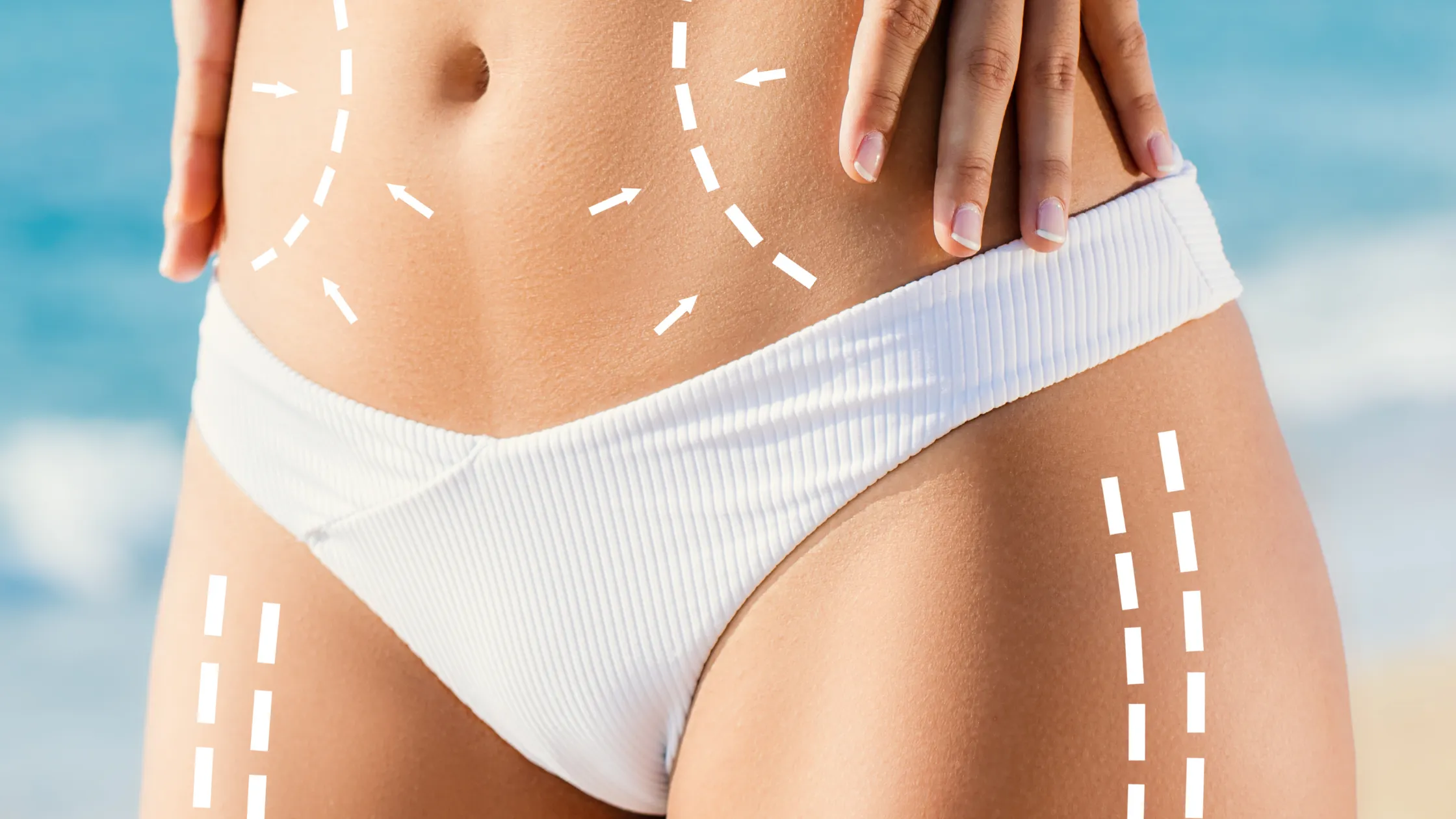
Liposuction is a surgical procedure that removes stubborn pockets of fat through a thin tube called a cannula, reshaping areas such as the abdomen, flanks, thighs, arms or chin. It suits people at a stable weight whose localised fat has not responded to diet and exercise. Because it sculpts rather than slims, liposuction is a body-contouring operation — not a weight-loss method — and the technique used is tailored to the areas being treated.
Is this treatment right for you?
Suitable for: healthy adults at a stable weight with localised, diet-resistant fat and reasonably elastic skin.
Less ideal if: weight loss is your goal, your weight is still fluctuating, or your skin is very loose — skin-removal surgery or obesity treatment may suit you better.
Suitability can only be confirmed by a qualified clinician after assessing you, which is why every plan begins with a free, personalised review rather than a fixed promise.
Benefits & risks
A balanced view matters more than a sales pitch. Weigh both sides and discuss them with a clinician before deciding.
Potential benefits
- Removes localised fat deposits that have not responded to diet and exercise
- Refines the contour of areas such as the abdomen, flanks, thighs, arms and chin
- Uses small incisions of a few millimetres, which usually fade well over time
- Several areas can often be treated in a single operation
- Can be combined with a tummy tuck or used for fat transfer where appropriate
- Removed fat cells do not return, so results are typically long-lasting at a stable weight
Risks & considerations
- Bruising, swelling and tenderness that can persist for several weeks
- Contour irregularity, lumpiness or asymmetry that may need revision surgery
- Fluid build-up (seroma) or, less commonly, bleeding and infection
- Numbness or altered skin sensation, usually temporary but occasionally lasting
- Loose or dimpled skin in areas where elasticity is poor
- Rarely, blood clots (DVT or pulmonary embolism) and general anaesthetic risks
Am I a candidate?
- You have stubborn, localised fat that has not responded to diet and exercise
- Your weight has been stable for several months and is at or near your personal goal
- Your skin has reasonable elasticity, so it can retract over the new contour
- You are in good general health and do not smoke, or can stop around the time of surgery
- You understand that liposuction reshapes the body rather than reducing overall weight
Only a qualified clinician can confirm suitability after a personal assessment.
Process & recovery
Liposuction is usually performed under general anaesthetic and typically takes one to three hours, depending on how many areas are treated. The treating surgeon infuses a tumescent fluid to reduce bleeding and discomfort, then removes fat through small incisions using a thin cannula; a compression garment is fitted straight afterwards to support the new contour. Most people are walking the same day, manage light activity within a few days and return to desk-based work within one to two weeks, while swelling settles gradually over several months. The main risks — bruising, fluid build-up, contour irregularity, numbness, infection and, rarely, blood clots — are discussed fully before you decide.
What is liposuction?
Liposuction is one of the most widely performed cosmetic operations, used to remove localised fat deposits that stay put no matter how carefully you eat or how often you exercise. Common treatment areas include the abdomen, flanks (love handles), hips, inner and outer thighs, upper arms, back, knees and the area under the chin. The aim is proportion: reducing a bulge that is out of balance with the rest of your figure, rather than changing your weight on the scales.
It is important to understand what liposuction is not. It does not treat obesity, it does not remove loose skin, and it does not improve cellulite in any reliable way. Surgeons also limit the volume of fat removed in a single session for safety reasons. People carrying significant excess weight are usually advised to reach a stable, healthier weight first — and where loose skin is part of the picture, an operation such as a tummy tuck may be combined with, or preferred to, liposuction alone.
How liposuction works
On the day of surgery, the treating surgeon marks the treatment areas while you are standing, so the plan reflects how fat sits naturally on your body. Liposuction is usually carried out under general anaesthetic and typically takes one to three hours, depending on how many areas are treated. Tumescent fluid — a solution containing local anaesthetic and medication to constrict blood vessels — is infused first to reduce bleeding, bruising and discomfort. Fat is then loosened and suctioned out through a thin cannula inserted via small incisions, each usually only a few millimetres long. A compression garment is fitted straight away to control swelling and support the new contour.
Several energy-assisted variations exist, and the choice depends on your anatomy and the surgeon’s assessment:
| Technique | How it works | Often used for |
|---|---|---|
| Tumescent (traditional) | Fat is removed manually through the cannula after tumescent infusion | Most body areas; the standard approach |
| Ultrasound-assisted (e.g. Vaser) | Ultrasound energy loosens fat before suction | Fibrous areas such as the back or male chest; definition work |
| Power- or laser-assisted | A vibrating or laser-tipped cannula helps break up fat | Larger areas or denser tissue, at the surgeon’s discretion |
No single technique is right for everyone; what matters most is an honest assessment of your skin quality, fat distribution and goals. Where appropriate, the fat removed can also be purified and re-injected elsewhere as a fat transfer — the principle behind the Brazilian butt lift.
Recovery: what to expect
Recovery varies from person to person and with the number of areas treated, but the general arc looks like this:
| Stage | What is typical |
|---|---|
| First 48 hours | Swelling, bruising and leakage of tumescent fluid from the incisions; gentle walking is encouraged from day one |
| First 1–2 weeks | Compression garment worn as advised; aching eases; many people return to desk-based work towards the end of this period |
| 1–3 months | Light exercise resumes with the surgeon’s approval; most swelling settles; the new shape becomes clearer |
| Longer term | Residual swelling resolves and skin continues to adjust; the final contour is typically established by three to six months |
Numbness or firmness in the treated areas is common in the early months and usually settles gradually. Warning signs such as spreading redness, discharge, fever, or pain and swelling in one leg should always be reported promptly, wherever you are in your recovery.
Results and longevity
Liposuction permanently removes the treated fat cells, so the improvement in shape is typically long-lasting — provided your weight stays broadly stable. The cells that remain can still enlarge with weight gain, and significant fluctuations can change the result. Ageing, pregnancy and skin elasticity also influence how the contour holds over the years.
Expectations should be realistic: liposuction refines rather than transforms, results differ from person to person, and a small number of patients later choose a touch-up or revision to address irregularity. These possibilities are discussed openly before you decide, and photographs of comparable cases can be shared through our before and after gallery during your consultation.
Having liposuction in Türkiye
As a medical travel facilitator, we coordinate liposuction at accredited, Ministry of Health–authorised partner hospitals in Türkiye. Before you commit to anything, your photographs, medical history and goals are reviewed so the treating surgeon can advise whether liposuction — alone, combined with skin-removal surgery, or as part of a wider plan — is genuinely appropriate for you, and you receive a free, no-obligation personalised treatment plan.
Packages are all-inclusive and transparent, typically covering the procedure, hospital fees, hotel accommodation, airport and clinic transfers, and an English-speaking patient coordinator who supports you throughout your stay. Before you fly home, the treating surgeon reviews your recovery and confirms you are fit to travel; after your return to the UK, follow-up continues remotely with photo updates and direct access to the medical team.
This page is for general information and is not a substitute for personalised medical advice; suitability can only be confirmed after an individual assessment.
Before & after
Frequently asked questions
Is liposuction a weight-loss treatment? +
No — liposuction reshapes specific areas of the body rather than reducing overall body weight. It is designed for localised pockets of fat that resist diet and exercise, not for treating obesity. If significant weight loss is your goal, options such as gastric sleeve or gastric bypass surgery may be more appropriate, and these can be discussed in your free consultation.
Will the fat come back after liposuction? +
The fat cells removed during liposuction do not return, which is why the change in shape is typically long-lasting. However, the fat cells that remain can still enlarge if you gain weight, which can alter the result. Keeping your weight stable with a balanced diet and regular activity is the most reliable way to maintain your new contour.
How long is recovery after liposuction? +
Most people manage light activity within a few days of liposuction and return to desk-based work within one to two weeks, depending on the areas treated. A compression garment is usually worn for several weeks, and more strenuous exercise typically resumes after around four to six weeks with the treating surgeon's approval. Swelling continues to settle for several months, so the final result emerges gradually.
Is liposuction painful? +
You are asleep under general anaesthetic during liposuction, so the operation itself is not felt. Afterwards, bruising, swelling and an aching, tender feeling in the treated areas are common for the first week or two, and most people find this manageable with prescribed pain relief. Discomfort levels vary from person to person and with the number of areas treated.
Can liposuction tighten loose skin? +
No — liposuction removes fat but does not remove or significantly tighten loose skin. If your skin has poor elasticity, removing the fat underneath can sometimes make laxity more noticeable, which is why skin quality is assessed carefully beforehand. Where loose skin is the main concern, a procedure such as a tummy tuck, arm lift or thigh lift — sometimes combined with liposuction — may be recommended instead.
How long do I need to stay in Türkiye for liposuction? +
Patients typically stay in Türkiye for around five to seven days for liposuction, allowing time for the pre-operative assessment, the surgery itself, any overnight hospital stay and a wound check before departure. The exact length of stay depends on the areas treated and whether procedures are combined, and your free personalised treatment plan confirms the timing for your case.
When can I fly home after liposuction? +
Flying home is typically possible around five to seven days after liposuction, once the treating surgeon has reviewed your recovery and confirmed you are fit to travel. You may be advised to wear your compression garment, keep mobile during the flight and stay well hydrated to support circulation. Your personalised plan sets out the exact recommendation for you.
When will I see my liposuction results? +
An early change in shape is often visible within the first few weeks after liposuction, once the initial swelling starts to subside. Because residual swelling settles slowly, the final contour typically develops over three to six months, and skin can continue to adjust beyond that. Wearing the compression garment as advised helps the tissues settle smoothly.