
 Facial Aesthetics
  Body Contouring
  Skin Rejuvenation
  Eye & Eyelid Surgery
  Mummy Makeover
  Obesity Treatment
  Dental Aesthetics
  Hair Transplant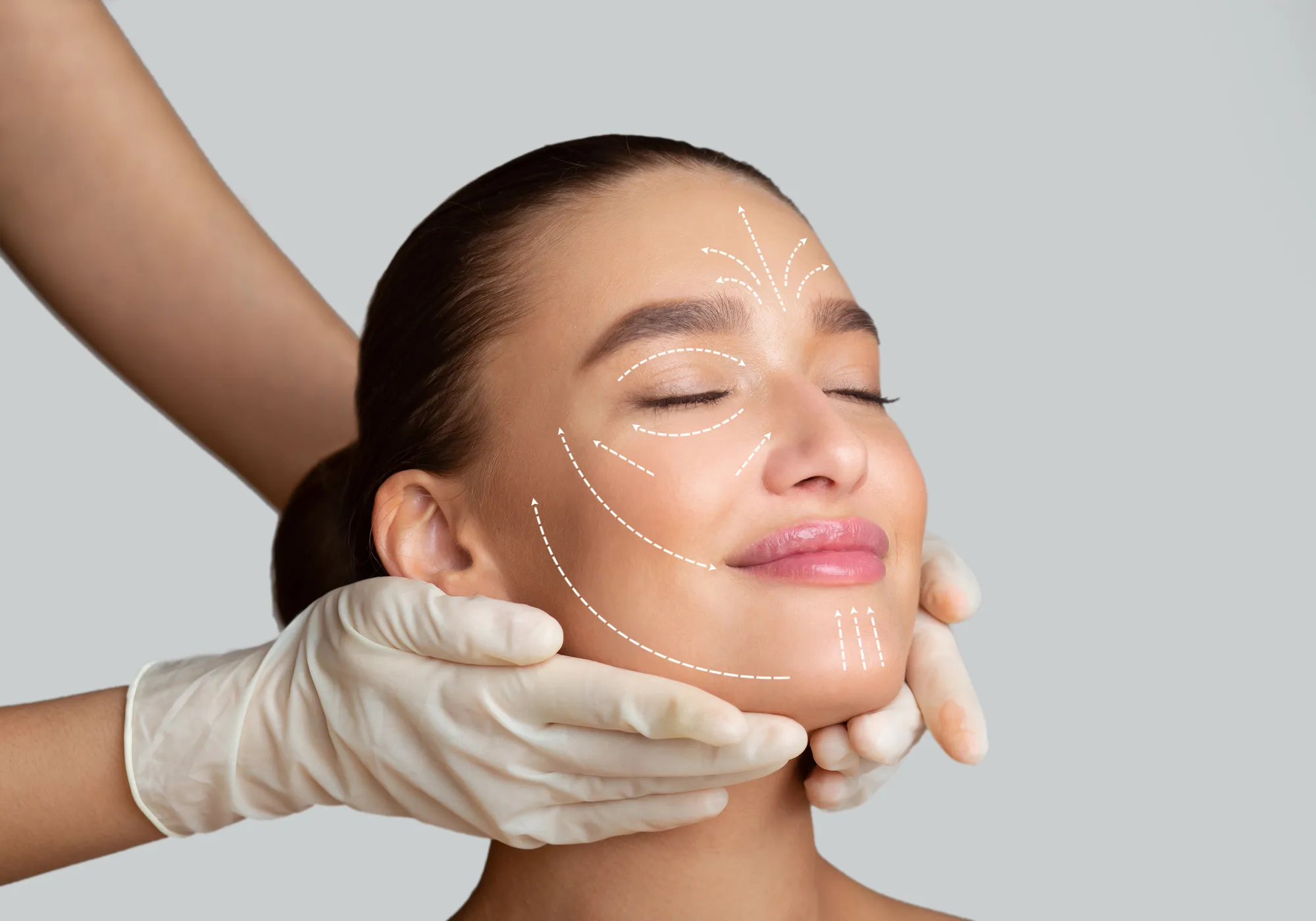
A facelift (rhytidectomy) is a surgical procedure that lifts and tightens sagging skin and the deeper tissues of the face, softening jowls and deep folds for a firmer, more rested appearance. It is often chosen by people who feel their lower face has begun to look tired or heavy in a way that skincare and non-surgical treatments no longer address. Because the face and neck age together, a facelift is frequently planned alongside a neck lift for a balanced, natural-looking result.
Is this treatment right for you?
Suitable for: people with noticeable sagging in the cheeks, jowls or jawline who are in good general health and have realistic expectations.
Less ideal if: your main concern is skin texture, sun damage or fine lines, which may respond better to skin resurfacing treatments, or if health conditions or smoking make elective surgery inadvisable.
Suitability can only be confirmed by a qualified clinician after assessing you, which is why every plan begins with a free, personalised review rather than a fixed promise.
Benefits & risks
A balanced view matters more than a sales pitch. Weigh both sides and discuss them with a clinician before deciding.
Potential benefits
- Lifts sagging cheeks and jowls to restore a smoother, firmer jawline
- Softens deep folds between the nose and mouth and below the corners of the mouth
- Repositions the deeper tissues as well as the skin, which helps results look natural rather than pulled
- Often combined with a neck lift to treat the face and neck as one unit
- Incisions are typically hidden around the ears and within the hairline
- Results are long-lasting, although the face continues to age naturally
Risks & considerations
- Bleeding under the skin (haematoma), which occasionally needs further surgery
- Infection, delayed wound healing or, rarely, loss of skin near the incisions, particularly in smokers
- Visible or thickened scarring and hair loss around the incision lines
- Numbness or altered sensation in the face and ears, usually temporary but occasionally lasting
- Injury to the facial nerve causing weakness of facial movement, usually temporary and rarely permanent
- Asymmetry, anaesthetic risks and, in some cases, the need for revision surgery
Am I a candidate?
- You have noticeable sagging in the cheeks, jowls or along the jawline
- Deep folds around the nose and mouth bother you despite non-surgical treatments
- You are in good general health, a non-smoker or willing to stop before surgery
- Your weight is stable, as significant weight changes can affect the result
- You have realistic expectations about what a facelift can and cannot change
Only a qualified clinician can confirm suitability after a personal assessment.
Process & recovery
A facelift is performed under general anaesthetic or sedation and typically takes two to four hours, depending on the technique and whether a neck lift is combined; a hospital stay of one or two nights is common. Swelling, bruising and a feeling of tightness are expected in the first two to three weeks, with subtle refinement continuing for months, and strenuous exercise is usually paused for several weeks. As with any surgery there are risks, including bleeding under the skin (haematoma), infection, visible scarring, asymmetry, numbness and, rarely, injury to the facial nerve. The treating surgeon will discuss these with you before you decide.
What is a facelift?
A facelift, known medically as a rhytidectomy, is an operation that repositions the skin and the deeper supporting layer of the face — often called the SMAS — to counteract the changes that come with age. Over time the skin loses elasticity, facial fat descends and the supporting tissues slacken, which can create jowls along the jawline, deep folds running from the nose to the mouth, marionette lines below the corners of the mouth and a general loss of definition in the lower face.
It helps to understand what a facelift does and does not treat. It addresses sagging and volume descent in the lower two-thirds of the face; it does not change the surface quality of the skin, so sun damage, fine lines and uneven tone may respond better to treatments such as laser skin resurfacing. It also does not lift a heavy brow or treat hooded eyelids, which are the roles of a brow lift and eyelid surgery. Because the jawline and neck age together, many surgeons plan a facelift alongside a neck lift so the result looks consistent from cheek to collarbone.
How facelift surgery works
On the day of surgery, a facelift in Türkiye is typically performed under general anaesthetic or sedation and takes around two to four hours, depending on the technique and any combined procedures. The surgeon makes incisions that usually begin in the hairline at the temples, continue around the ear and end in the lower scalp or behind the ear. The skin is lifted, the deeper tissues are tightened and repositioned, excess skin is removed and the incisions are closed with fine sutures. Small drains are sometimes placed for the first day or so, and a supportive dressing or garment is applied.
Several techniques are in common use, and the choice depends on your anatomy and the degree of sagging:
| Technique | Approach | Typically suited to |
|---|---|---|
| SMAS facelift | Tightens the deeper supporting layer as well as the skin | Moderate sagging of the cheeks, jowls and jawline |
| Deep plane facelift | Releases and repositions the deeper tissues as one unit | More pronounced sagging or deeper folds |
| Mini (short-scar) facelift | Shorter incisions around the ears with a more limited lift | Milder jowling in the lower face; often a somewhat quicker recovery |
The treating surgeon will examine your face and neck together and explain which approach they recommend for you, including where the scars will sit and what each option can realistically achieve.
Recovery: what to expect
Recovery varies from person to person, but a general pattern looks like this:
| Timeframe | What to expect |
|---|---|
| First 48 hours | Swelling, bruising and tightness; dressings and any drains in place; rest with the head elevated |
| First 1–2 weeks | Bruising fades and sutures are checked or removed; many people feel ready for desk-based work towards the end of this period |
| Weeks 2–6 | Most visible swelling settles; light activity resumes; strenuous exercise usually still paused early on |
| 1–3 months and beyond | Residual swelling resolves, numbness typically improves and scars gradually fade and soften |
Numbness of the cheeks and around the ears is common in the early months and usually improves, although in a small number of cases altered sensation can persist. Follow the treating surgeon’s advice on wound care, sleeping position, sun protection and returning to exercise, and report any sudden swelling or pain promptly, as this can be a sign of bleeding under the skin that needs review.
Results and longevity
A well-planned facelift aims for a naturally refreshed version of your own face — a firmer jawline, softer folds and less heaviness — rather than a tight or pulled look. Results are long-lasting and many people enjoy them for years, but no operation stops the ageing process: skin quality, genetics, sun exposure, smoking and weight changes all influence how the face continues to change. Scars are permanent, although they typically fade well and are hidden in and around the hairline and ears. In some cases asymmetry or relapse of laxity may lead to a discussion about revision surgery, which is why a thorough consultation and realistic expectations matter so much.
Having a facelift in Türkiye
We are a facilitator, not a hospital: we coordinate your facelift at accredited, Ministry of Health–authorised partner hospitals in Türkiye and connect you with the treating surgeon, who assesses your suitability and performs the operation. Your journey typically begins with a free online consultation and photo assessment, followed by a personalised, no-obligation treatment plan that sets out the recommended technique, the length of stay and what your all-inclusive package covers. Airport transfers, accommodation and interpreter support are arranged for you, so language is not a barrier at any point in your care.
After you return to the UK, follow-up continues remotely: the care team reviews your healing photos, answers questions and stays in touch through your recovery. You can see how each stage fits together on our patient journey page, or request a free, no-obligation personalised plan to find out whether a facelift is right for you.
Before & after
Frequently asked questions
Will a facelift leave visible scars? +
Every facelift leaves permanent scars, but they are placed to be as inconspicuous as possible, usually starting in the hairline at the temples, running around the ear and finishing in the lower scalp or behind the ear. In most cases they fade considerably over several months. How well scars settle varies from person to person, and the treating surgeon will explain what to expect for your skin type.
How long is recovery after a facelift? +
Most bruising and swelling after a facelift settles within two to three weeks, and many people feel comfortable returning to desk-based work after around two weeks. Strenuous exercise is usually paused for four to six weeks. A feeling of tightness and subtle residual swelling can continue for a few months as the tissues settle.
How long does a facelift last? +
The results of a facelift are long-lasting, and many people enjoy them for years. A facelift does not stop the natural ageing process, so the face will continue to change gradually over time. Sun protection, not smoking, a stable weight and a generally healthy lifestyle may help maintain the result.
Is a facelift painful? +
A facelift is performed under general anaesthetic or sedation, so you should not feel pain during the operation itself. Afterwards, most people describe tightness, tenderness and numbness rather than severe pain, and discomfort is typically managed with prescribed pain relief. It usually eases considerably within the first one to two weeks.
What is the difference between a mini facelift and a full facelift? +
A mini facelift uses shorter incisions around the ears to treat milder sagging in the lower face, often with a somewhat quicker recovery. A full facelift addresses more extensive laxity in the cheeks, jowls and jawline, frequently combined with a neck lift. The treating surgeon will recommend the approach that suits your degree of skin laxity and your goals.
How long do I need to stay in Türkiye for a facelift? +
Most patients stay in Türkiye for around seven to ten days for a facelift, allowing time for the face-to-face consultation, the surgery, removal of sutures and an initial follow-up check before travelling. Your personalised treatment plan will confirm the exact stay recommended in your case.
When can I fly home after a facelift? +
Many people are cleared to fly home around seven to ten days after a facelift, once the treating surgeon is satisfied with early healing and any sutures have been checked or removed. Flying too soon may worsen swelling, so the timing is always confirmed individually. Your personalised plan sets out the recommended timing before you book anything.
When will I see results after a facelift? +
You will notice a change as soon as the main swelling from a facelift begins to settle, usually within two to three weeks. The final result typically emerges over three to six months as residual swelling resolves, the tissues soften and the scars begin to fade and mature.