
 Facial Aesthetics
  Body Contouring
  Skin Rejuvenation
  Eye & Eyelid Surgery
  Mummy Makeover
  Obesity Treatment
  Dental Aesthetics
  Hair Transplant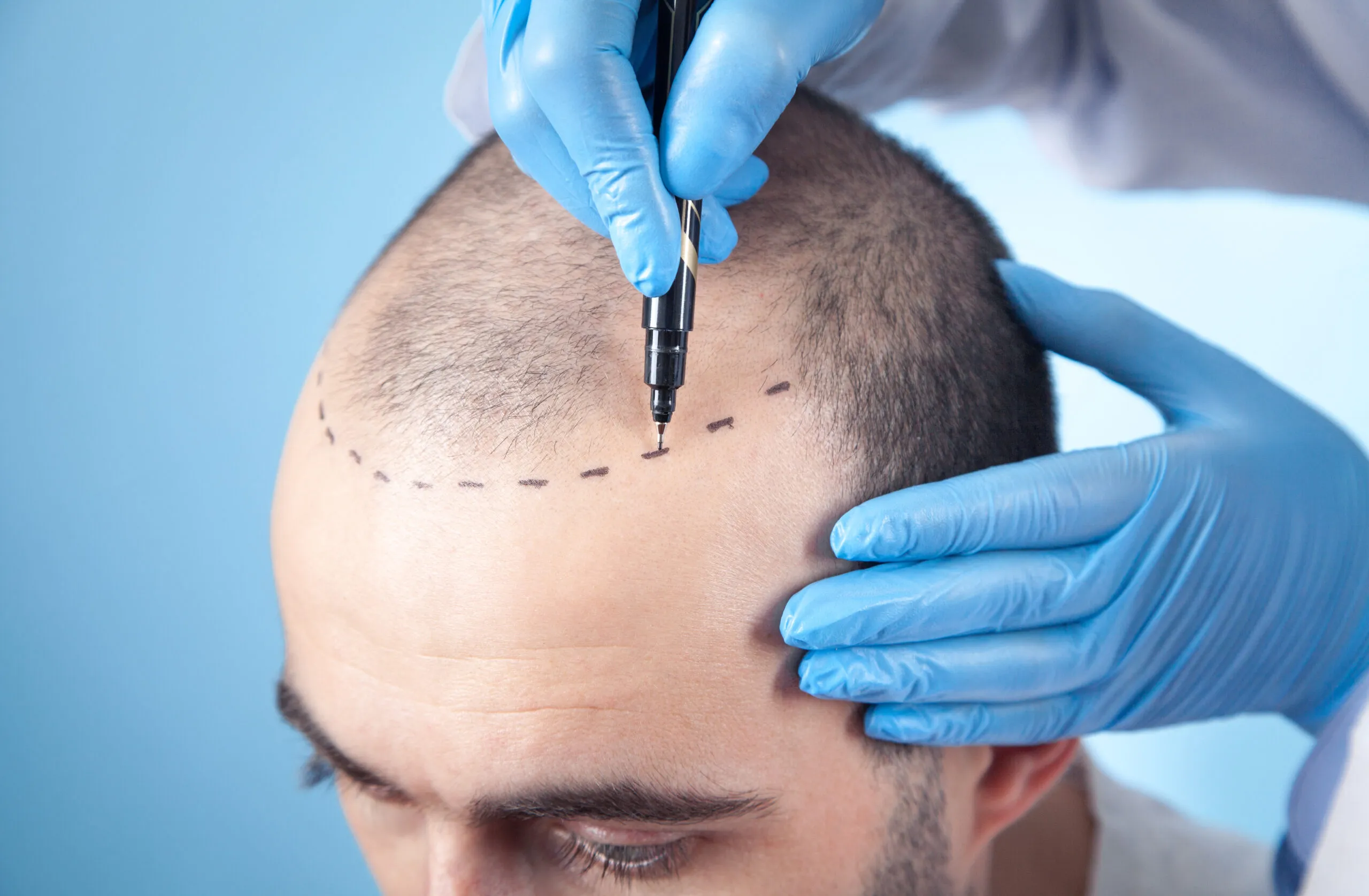
Follicular Unit Extraction (FUE) is a hair transplant technique that removes hair follicles one by one from the donor area at the back of the head using a micro-punch, then implants them where hair has thinned. Because grafts are taken individually rather than in a strip, FUE leaves no linear scar and typically allows a quicker return to daily life than older strip (FUT) methods. It is the foundation of most modern hair restoration — refinements such as Sapphire FUE and DHI build on it — and it suits adults with stable hair loss and a healthy donor area.
Is this treatment right for you?
Suitable for: adults with stable, established hair loss, a healthy donor area at the back or sides of the scalp and realistic expectations about density.
Less ideal if: your hair loss is still progressing rapidly, your donor area is limited or previously overharvested, or you have an uncontrolled scalp condition.
Suitability can only be confirmed by a qualified clinician after assessing you, which is why every plan begins with a free, personalised review rather than a fixed promise.
Benefits & risks
A balanced view matters more than a sales pitch. Weigh both sides and discuss them with a clinician before deciding.
Potential benefits
- No linear donor scar - follicles are removed individually, leaving only tiny dot marks that tend to fade over time
- Performed under local anaesthetic in a single day, with no overnight hospital stay in most cases
- Typically a shorter, more comfortable recovery than strip (FUT) surgery, with many people back at work within days
- Each graft is placed to follow the natural angle and direction of your existing hair
- Donor hair from the back and sides of the scalp is typically resistant to further hair loss, so results tend to be long-lasting
- The technique underpins refinements such as Sapphire FUE and DHI, so the approach can be tailored to your case
Risks & considerations
- Swelling of the forehead and around the eyes during the first few days
- Temporary numbness, tingling or itching in the donor or recipient area
- Folliculitis (inflamed follicles) as new hairs grow through
- Shock loss - temporary shedding of some existing hair around the transplanted area
- Uneven density, an unnatural-looking hairline or visible donor thinning if too many grafts are taken
- Infection or bleeding, which are uncommon and usually treatable
Am I a candidate?
- Your hair loss has been stable for some time or is being managed with medication
- You have a healthy donor area at the back or sides of the scalp
- You are in good general health and have realistic expectations about achievable density
- You would prefer to avoid the linear scar associated with strip (FUT) surgery
Only a qualified clinician can confirm suitability after a personal assessment.
Process & recovery
An FUE hair transplant is a single-day procedure performed under local anaesthetic, typically taking several hours depending on the number of grafts. Follicles are extracted individually from the donor area with a micro-punch, fine channels are opened in the recipient area, and each graft is placed to follow the natural angle and direction of growth. Redness and pinpoint scabs settle within about seven to ten days; transplanted hairs shed at two to four weeks — which is normal — with new growth from three to four months and fuller results by twelve to eighteen months. The main risks include swelling, temporary numbness, folliculitis, small donor-area dot marks and, rarely, infection or uneven density.
What is an FUE hair transplant?
An FUE hair transplant (Follicular Unit Extraction) is the technique behind most modern hair restoration. Rather than removing a strip of scalp — the older FUT approach — the treating surgeon extracts follicular units one at a time from the donor area at the back and sides of the head, using a micro-punch typically less than a millimetre across. Each unit contains between one and four hairs, and once implanted into the thinning or bald area it continues to grow as your own hair.
The donor region matters as much as the technique. Hair at the back and sides of the scalp is typically resistant to dihydrotestosterone (DHT), the hormone that drives pattern hair loss, which is why transplanted follicles usually keep growing in areas where hair had previously been lost. The same core method underpins beard, eyebrow and female hair transplants, as well as the Sapphire FUE and DHI refinements.
How an FUE hair transplant works
The procedure day follows a clear sequence, all under local anaesthetic:
- Planning and hairline design. The treating surgeon assesses your donor capacity, agrees the target areas with you and draws the new hairline to suit your face and age.
- Donor extraction. The donor area is usually trimmed short, then follicular units are removed one by one with a micro-punch and kept in a holding solution.
- Channel opening. Fine incisions are made in the recipient area, setting the angle, direction and density of the future growth.
- Implantation. Each graft is placed into its channel, matching the way your natural hair grows.
Two commonly offered refinements differ mainly in how the recipient channels are created:
| Technique | How it differs | Often considered when |
|---|---|---|
| Classic FUE | Channels are opened with fine steel blades or needles before grafts are inserted | A well-established, versatile approach for most patterns of loss |
| Sapphire FUE | Channels are opened with a smooth sapphire blade, allowing very fine, close incisions | Higher density is planned or finer channel work is preferred |
| DHI | Grafts are loaded into an implanter pen and placed in one step, without separate channels | Precise angle control matters most, such as hairline work or unshaven cases |
No single technique is universally better; the treating surgeon recommends an approach based on your pattern of loss, hair characteristics and the density planned.
Recovery: what to expect
Recovery varies from person to person, but the general pattern after an FUE hair transplant is consistent:
| Stage | What is typical |
|---|---|
| First 48 hours | Redness, mild swelling and pinpoint scabs around each graft; the scalp is kept dry and untouched as instructed |
| First 1–2 weeks | Gentle washing begins from around day three; scabs lift by days seven to ten, and many people return to desk work within a few days |
| 1–3 months | Transplanted hairs shed at two to four weeks — normal and temporary — before early regrowth begins from around month three |
| Longer term | Density builds steadily through months six to nine, with fuller, more mature results typically by twelve to eighteen months |
During the first couple of weeks you will usually be asked to sleep with your head elevated, avoid touching or scratching the grafts, and stay away from heavy exercise, saunas, swimming and direct sun until the treating surgeon confirms it is safe. Small spots or folliculitis can appear as new hairs push through and usually settle, but spreading redness, fever or worsening pain should always be reported promptly.
Results and longevity
Because donor follicles tend to keep their resistance to pattern hair loss, the results of an FUE hair transplant are typically long-lasting, and the transplanted hair can be cut, styled and treated like the rest of your hair once it has grown in. Honest expectations still matter: the density a transplant can achieve is limited by how many grafts your donor area can safely supply, native hair around the grafts may continue to thin over the years, and some patients later choose medication or a second session to maintain or build on the result. Growth is gradual — what you see at three months is not the final outcome — so patience is part of the process.
Having an FUE hair transplant in Türkiye
As a medical travel facilitator, we coordinate FUE hair transplants at accredited, Ministry of Health–authorised partner hospitals and clinics in Türkiye. Before you commit to anything, your photographs, medical history and goals are reviewed so the treating surgeon can advise whether FUE is genuinely appropriate for you — and how many grafts your donor area can realistically support — and you receive a free, no-obligation personalised treatment plan.
Packages are all-inclusive and transparent, typically covering the procedure, hotel accommodation, airport and clinic transfers, aftercare products and an English-speaking patient coordinator who supports you throughout your stay; you can read how each stage works on our patient journey page. Before you fly home the grafts are checked and the first wash is demonstrated; after your return to the UK, follow-up continues remotely with photo updates while the new hair grows in.
This page is for general information and is not a substitute for personalised medical advice; suitability can only be confirmed after an individual assessment.
Before & after
Frequently asked questions
Is FUE painful? +
An FUE hair transplant is carried out under local anaesthetic, so the procedure itself is not usually painful — many people describe the anaesthetic injections as the most uncomfortable part. Afterwards, mild soreness, tightness and swelling are common for a few days and are typically manageable with simple pain relief. Comfort levels vary between individuals.
Will there be a scar after an FUE hair transplant? +
FUE leaves no linear scar because follicles are removed one by one rather than in a strip. Each extraction leaves a tiny dot mark in the donor area; these tend to fade over time and are usually hard to see once the surrounding hair grows back, although very short haircuts may reveal them in some people.
When will I see results from an FUE hair transplant? +
Transplanted hairs typically shed two to four weeks after an FUE hair transplant, which is a normal part of the growth cycle. New growth usually begins from three to four months, with density building steadily and fuller results typically visible by twelve to eighteen months. Timelines vary between individuals.
How long does an FUE hair transplant take? +
An FUE hair transplant is usually completed in a single day, with the session typically lasting several hours depending on the number of grafts. Larger cases are sometimes divided across two consecutive days. The treating surgeon confirms the expected duration once your personalised plan has been agreed.
How long does an FUE hair transplant last? +
The results of an FUE hair transplant are typically long-lasting, because donor follicles taken from the back and sides of the scalp tend to be resistant to the hormone-driven thinning that causes pattern hair loss. Native, non-transplanted hair can continue to thin over time, however, so some patients use medication or consider a further session later. The treating surgeon discusses how to protect your long-term result.
How long do I need to stay in Türkiye for an FUE hair transplant? +
Patients typically stay in Türkiye for around three to four days for an FUE hair transplant, which allows time for the pre-operative consultation, the procedure itself and a first wash and check-up before departure. The exact stay depends on your treatment plan, and your free personalised plan confirms the timing for your case.
When can I fly home after an FUE hair transplant? +
Flying home is typically possible within a day or two of an FUE hair transplant, as the procedure is performed under local anaesthetic and does not usually require a hospital stay. Many patients prefer to wait for their first post-operative check and hair wash before travelling. Your personalised plan sets out the exact recommendation for you.
What is the difference between FUE and DHI? +
Both are follicular unit techniques that extract grafts individually, so neither leaves a linear scar. In classic FUE, fine channels are opened in the recipient area before the grafts are inserted; in DHI, grafts are loaded into an implanter pen and placed in a single step, which can give finer control over angle and direction. The treating surgeon recommends the technique, or combination of techniques, most appropriate for your case.