
 Facial Aesthetics
  Body Contouring
  Skin Rejuvenation
  Eye & Eyelid Surgery
  Mummy Makeover
  Obesity Treatment
  Dental Aesthetics
  Hair Transplant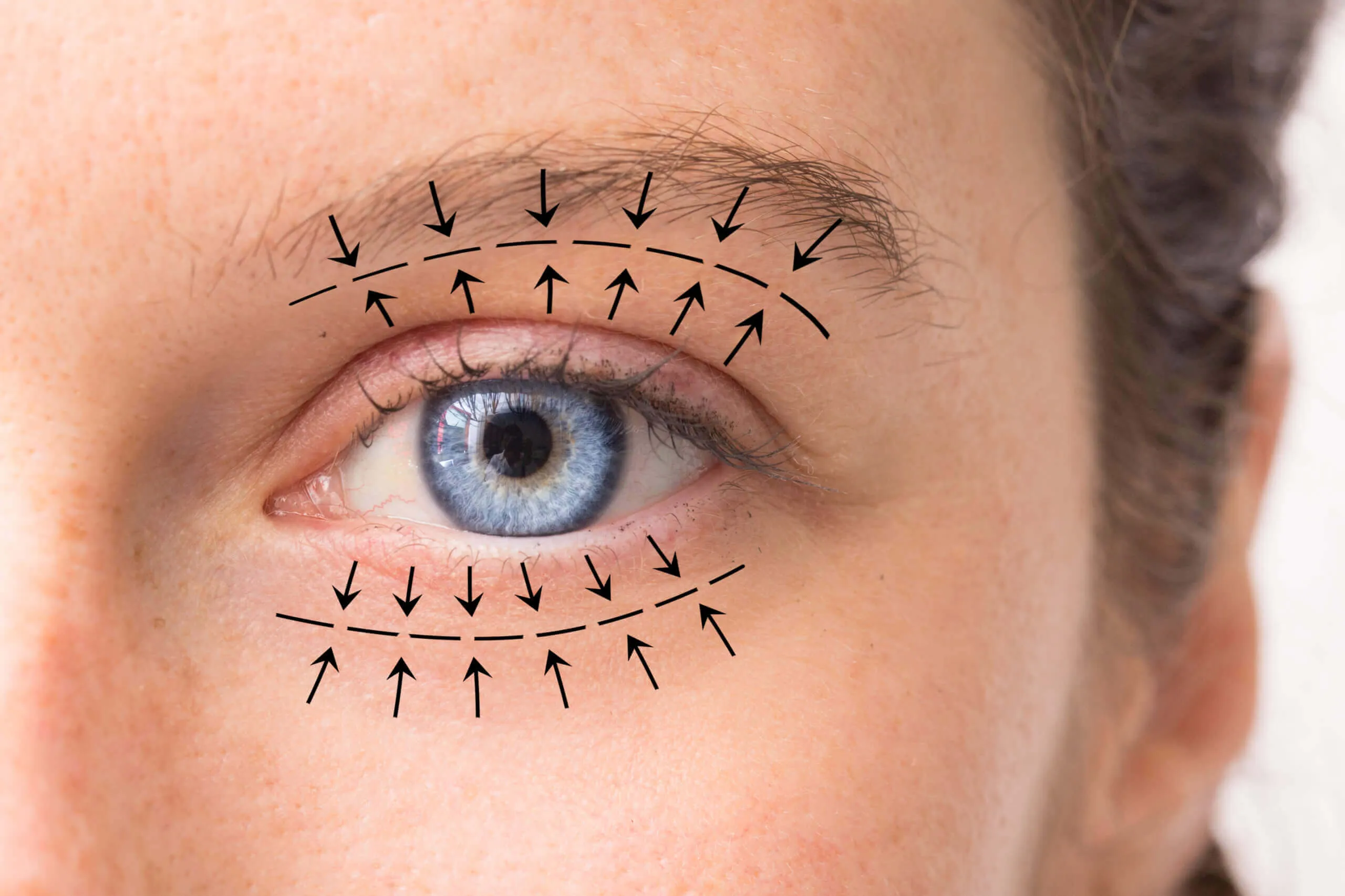
Lower eyelid surgery (lower blepharoplasty) is an operation that removes or repositions excess fat and tightens loose skin beneath the eyes to smooth under-eye bags and puffiness. It suits people whose under-eye area looks persistently tired or puffy regardless of how well they sleep. Depending on your anatomy, the incision can often be hidden inside the lower lid, and fat may be repositioned rather than removed to soften hollows under the eyes.
Is this treatment right for you?
Suitable for: adults in good general health with under-eye bags, puffiness or loose lower-lid skin that makes the eyes look persistently tired.
Less ideal if: you have uncontrolled dry eye or another significant eye condition, an active infection around the eyes, unmanaged thyroid eye disease, or expect surgery alone to remove dark circles caused by skin pigmentation.
Suitability can only be confirmed by a qualified clinician after assessing you, which is why every plan begins with a free, personalised review rather than a fixed promise.
Benefits & risks
A balanced view matters more than a sales pitch. Weigh both sides and discuss them with a clinician before deciding.
Potential benefits
- Smooths under-eye bags and puffiness for a fresher, more rested appearance
- The incision can often be placed inside the lower eyelid, avoiding a cut in the skin
- Fat can be repositioned rather than removed, softening hollows and the tear trough
- Results are long-lasting, as fat that is removed or repositioned rarely builds up again in the same way
- Can be combined with upper eyelid surgery in one operation and a single recovery
- Often performed as a day case, with most visible bruising settling within one to two weeks
Risks & considerations
- Bruising, swelling and a feeling of tightness around the eyes for one to two weeks
- Dry, gritty, watery or irritated eyes, usually temporary but occasionally persistent
- Changes to lower lid position, including a pulled-down or outward-turning lid (ectropion)
- Asymmetry between the two eyes, or a visible scar where a skin incision is used
- Bleeding, infection, temporary blurred vision and, very rarely, sight-threatening bleeding behind the eye
- General anaesthetic risks, and the possibility of revision surgery if healing is uneven
Am I a candidate?
- You have under-eye bags or puffiness that persist regardless of sleep, diet or skincare
- You are in good general health and a non-smoker, or willing to stop smoking around surgery
- Your eyes are healthy, with any dry eye or thyroid eye disease assessed and stable first
- You have realistic expectations and understand that surgery does not stop future ageing
Only a qualified clinician can confirm suitability after a personal assessment.
Process & recovery
Lower eyelid surgery is usually performed under local anaesthetic with sedation or a general anaesthetic and typically takes one to two hours, often as a day case. The treating surgeon removes or repositions fat, and trims a little skin where needed, through an incision hidden inside the lid or placed just below the lash line. Bruising and swelling are most noticeable in the first week and largely settle over one to two weeks, with deeper swelling fading over the following months. Risks include dry or irritated eyes, temporary blurred vision, asymmetry, changes to lower lid position, bleeding, infection and, rarely, revision surgery.
What is lower eyelid surgery?
Lower eyelid surgery — also known as lower blepharoplasty — reshapes the area directly beneath the eyes to treat bags, puffiness and loose skin. With age, the small pads of fat that cushion the eye can push forward against a weakening lid, while the skin above them loses elasticity. The result is the familiar under-eye bag, often sitting above a hollow groove known as the tear trough. Genetics play a part too, which is why some people notice prominent bags well before middle age.
Unlike creams or concealer, lower eyelid surgery changes the underlying structure: bulging fat is removed or repositioned, and genuinely loose skin is conservatively tightened. It is often combined with upper eyelid surgery in the same operation for people who want the whole eye area refreshed within a single recovery period.
How lower eyelid surgery works
Assessment and planning
The treating surgeon starts by working out what is actually causing the tired look — fat, loose skin, hollowing or a combination — and by checking lower lid tone, tear function and your general eye health. Conditions such as dry eye or thyroid-related eye problems are assessed first, because they influence both the choice of technique and the timing of surgery.
Choosing the approach
There are two main routes into the lower lid, and the choice shapes both the scar and the recovery:
| Aspect | Transconjunctival | Transcutaneous |
|---|---|---|
| Incision | Inside the lower eyelid | Just below the lash line |
| Typically used for | Fat bags with good skin tone | Bags combined with loose or excess skin |
| External incision | None — hidden inside the lid | A fine line that usually fades well |
With either approach, fat can be taken away or — increasingly often — repositioned into the tear trough, using tissue you already have to smooth the transition between lid and cheek rather than leaving a hollow behind.
On the day
Lower eyelid surgery typically takes one to two hours under local anaesthetic with sedation or a general anaesthetic, often as a day case or with one night in hospital. Fine skin sutures, where used, are usually removed within about a week. The eyes may feel tight, gritty and watery at first, and vision can be slightly blurred by ointment and swelling for a few days.
Recovery: what to expect
Recovery varies from person to person, but a typical arc looks like this:
- First 48 hours — swelling and bruising are at their most noticeable; cold compresses, sleeping with the head raised and prescribed drops or ointment keep you comfortable.
- First 1–2 weeks — bruising fades, any skin sutures are removed and most people feel ready for work and social situations; strenuous exercise, swimming and contact lenses are usually avoided during this period.
- 1–3 months — deeper swelling settles gradually and the new, smoother contour becomes clear; any lash-line scar begins to soften and fade.
- Longer term — scars continue maturing for up to a year, and consistent sun protection helps preserve the result.
Increasing pain, fresh bleeding or any change in vision after lower eyelid surgery should be reported promptly rather than waited out.
Results and longevity
The aim of lower eyelid surgery is a rested, natural-looking version of your own face rather than a dramatically different one. Because fat that has been removed or repositioned rarely re-accumulates in the same way, results are generally long-lasting, and true under-eye bags seldom return as they were. The face does keep ageing, however, so skin laxity and fine lines will continue to evolve over the years.
It is equally important to understand what the operation does not do. It does not change skin pigmentation, so dark circles caused by discolouration rather than shadow may persist, and it does not remove fine, crepey lines on its own — treatments such as laser skin resurfacing are sometimes suggested alongside or afterwards for skin texture. An honest consultation covers which parts of your concern surgery can address and which it cannot.
Having lower eyelid surgery in Türkiye
As a medical travel facilitator, we coordinate lower eyelid surgery at accredited, Ministry of Health–authorised partner hospitals in Türkiye. Your photographs and medical history are reviewed in advance so the treating surgeon can confirm the operation is genuinely appropriate — and flag when a different approach would serve you better — before you receive a free, no-obligation personalised treatment plan.
Packages are all-inclusive and transparent, typically covering the procedure, hotel accommodation, airport and clinic transfers, and an English-speaking patient coordinator who stays with you at appointments. Most patients remain in Türkiye for around five to seven days so the treating surgeon can check healing and remove any sutures before the flight home; see your patient journey for how a typical trip runs. After you return to the UK, the team stays available for photo reviews and advice while the final result develops.
This page is for general information and is not a substitute for personalised medical advice; suitability for lower eyelid surgery can only be confirmed after an individual assessment.
Before & after
Frequently asked questions
Will bags come back? +
Lower eyelid surgery is considered long-lasting because fat that has been removed or repositioned rarely builds up again in the same way, so true under-eye bags seldom return as they were. The face does continue to age, however, so skin laxity and fine lines can change over time. Sun protection and not smoking help preserve the result.
Are scars visible? +
It depends on the approach used for your lower eyelid surgery. When the incision is made on the inside of the lower lid (the transconjunctival approach), there is no cut in the skin at all. When loose skin also needs treating, the incision sits just below the lash line, where it typically fades to a fine line, though how scars heal varies from person to person.
How long is recovery? +
Most bruising and swelling after lower eyelid surgery settles within one to two weeks, and many people feel comfortable at work and in social situations after that. Subtle, deeper swelling can take a few months to resolve fully, which is when the final contour emerges. Strenuous exercise is usually paused for around two weeks.
Is lower eyelid surgery painful? +
Lower eyelid surgery is carried out under local anaesthetic with sedation or a general anaesthetic, so you should not feel pain during the operation itself. Afterwards, most people describe tightness, soreness and swelling rather than severe pain, and simple pain relief is usually enough. Discomfort varies from person to person.
How long do I need to stay in Türkiye for lower eyelid surgery? +
A stay of around five to seven days is typical for lower eyelid surgery, allowing time for the operation, early healing and a follow-up check with the treating surgeon. The exact length depends on your case and on whether other procedures are combined. Your free personalised plan confirms the recommended stay.
When can I fly home after lower eyelid surgery? +
Most people can typically fly home around five to seven days after lower eyelid surgery, once the treating surgeon has checked healing and removed any skin sutures. Flying earlier is not usually advised while swelling is at its peak. Your personalised plan sets out the recommended departure date for your case.
When will I see the results of lower eyelid surgery? +
You will notice a change as soon as the main bruising fades, usually within one to two weeks of lower eyelid surgery. The refined, final result develops gradually as deeper swelling settles, typically over one to three months and sometimes a little longer. Progress photographs are a helpful way to track the improvement.
Does lower eyelid surgery remove dark circles? +
Lower eyelid surgery can help where dark circles are caused by shadows from bulging fat or hollows, because smoothing the contour reduces the shadowing. It does not change pigmentation in the skin itself, so discolouration may remain and is sometimes better treated with skin treatments instead or alongside. The treating surgeon assesses the cause of your dark circles at consultation.