
 Facial Aesthetics
  Body Contouring
  Skin Rejuvenation
  Eye & Eyelid Surgery
  Mummy Makeover
  Obesity Treatment
  Dental Aesthetics
  Hair Transplant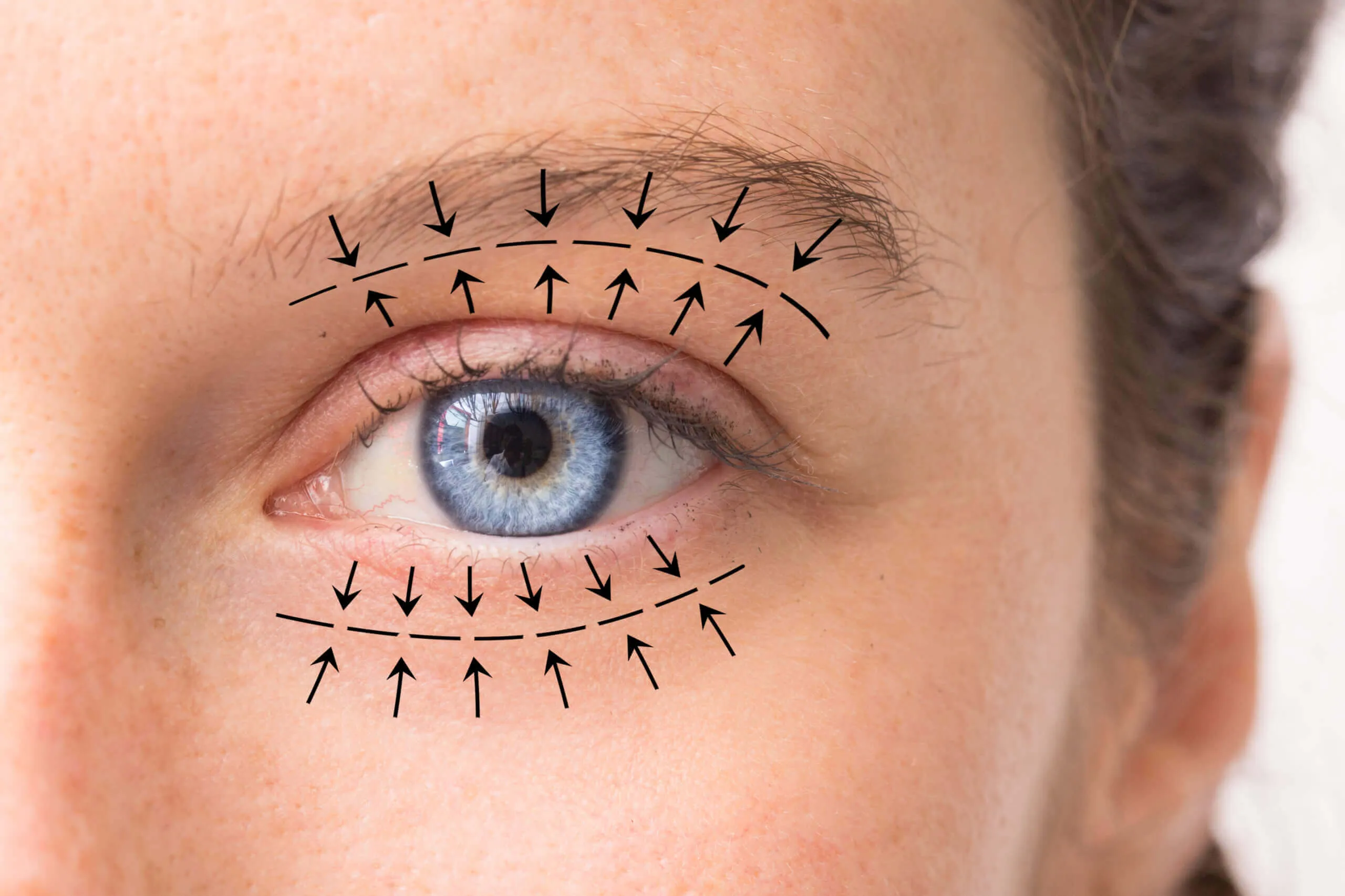
Upper eyelid surgery, also called upper blepharoplasty, is an operation that removes excess skin — and sometimes small amounts of fat or muscle — from the upper eyelids. It suits people whose lids have become heavy or hooded with age, creating a tired look even when well rested. Where hooded skin hangs low enough to restrict the upper field of vision, surgery may also improve sight. Because the incision is hidden in the natural crease of the lid, the resulting fine scar is typically difficult to see once healed.
Is this treatment right for you?
Suitable for: adults with excess upper-lid skin causing a heavy, hooded or tired appearance, and realistic expectations of a refreshed rather than dramatic change.
Less ideal if: you have unassessed dry eye or other eye conditions, or your main concern is a drooping lid caused by muscle weakness (ptosis), which needs a different operation.
Suitability can only be confirmed by a qualified clinician after assessing you, which is why every plan begins with a free, personalised review rather than a fixed promise.
Benefits & risks
A balanced view matters more than a sales pitch. Weigh both sides and discuss them with a clinician before deciding.
Potential benefits
- Reduces hooded, heavy upper lids that can make the eyes look tired or older
- May improve the upper field of vision where drooping skin obstructs sight
- The incision sits in the natural lid crease, so the fine scar is typically well hidden
- Usually a day case under local anaesthetic, with a comparatively quick recovery
- Can be combined with lower eyelid surgery or a brow lift for a balanced result
- Results are typically long-lasting, often for many years
Risks & considerations
- Bruising, swelling and temporary blurred or watery vision in the first days
- Dry, gritty or irritated eyes, occasionally persisting and needing lubricating drops
- Visible or thickened scarring, although the crease incision usually fades well
- Asymmetry between the two eyelids, which may need revision surgery
- Difficulty closing the eyes fully, usually temporary but occasionally lasting
- Infection, bleeding and, very rarely, bleeding behind the eye that can threaten sight
Am I a candidate?
- You have excess upper-eyelid skin creating a hooded, heavy or tired appearance
- Your general and eye health are good, with any dry eye or thyroid conditions assessed and stable
- You do not smoke, or can stop around the time of surgery
- You have realistic expectations of a refreshed rather than dramatically different look
Only a qualified clinician can confirm suitability after a personal assessment.
Process & recovery
Upper eyelid surgery is usually performed as a day case under local anaesthetic, often with sedation, and typically takes under an hour for both eyes. The surgeon removes a measured strip of excess skin — and any protruding fat — through an incision hidden in the natural lid crease, then closes it with fine stitches, usually removed within about a week. Bruising and swelling settle over one to two weeks, and the scar fades over the following months. The main risks — dry or irritated eyes, temporary blurred vision, asymmetry, visible scarring and, rarely, difficulty closing the eyes fully — are explained before you decide.
What is upper eyelid surgery?
Upper eyelid surgery — known medically as upper blepharoplasty — is one of the most frequently requested procedures for the eye area. With age, the skin of the upper eyelid gradually loses elasticity and begins to fold over the natural crease, a change sometimes called dermatochalasis. Small pockets of fat around the eye can also push forward, adding puffiness towards the inner corner of the lid. The combined effect is hooding that can make the eyes look tired, heavy or smaller than they once were; in more pronounced cases the skin rests on the lashes or narrows the upper field of vision.
Genetics play a part as well as age, so some people notice hooded lids from their thirties or forties while others never develop them. Surgery addresses the problem directly: the excess skin, and where needed a small amount of fat or muscle, is removed through an incision concealed in the crease of the lid.
It is equally important to understand what upper eyelid surgery does not treat. If the lid margin itself sits too low because the lifting muscle has stretched or weakened — a condition called ptosis — removing skin will not correct it, and a different repair is required. Heaviness caused by a descended brow is often better addressed with a brow lift, on its own or in combination. An honest assessment establishes which of these applies to you before any surgery is planned.
How upper eyelid surgery works
On the day of surgery, the treating surgeon marks the excess skin while you are sitting upright with your eyes open, so the planned removal matches how your lids naturally sit. The procedure is usually performed under local anaesthetic, often with light sedation to keep you relaxed, and typically takes under an hour for both eyes. A measured strip of skin is removed along the crease, protruding fat is reduced or repositioned where needed, and the incision is closed with fine stitches. Most people go home the same day with cold compresses and ointment to ease early swelling.
Because several different issues can make the upper eye area look heavy, the right operation depends on the underlying cause:
| Underlying issue | What it looks like | Usual approach |
|---|---|---|
| Excess eyelid skin | A fold of skin hooding the crease | Upper eyelid surgery |
| Weak lid-lifting muscle (ptosis) | The lid margin itself sits low over the eye | Ptosis repair |
| Descended brow | Heaviness above the lid and a flattened brow | Brow lift, sometimes combined |
Where the lower lids are also puffy or hollow, lower eyelid surgery can often be performed during the same session for a balanced result.
Recovery: what to expect
Recovery varies from person to person, but the general arc looks like this:
| Stage | What is typical |
|---|---|
| First 48 hours | Swelling, bruising and tight, watery eyes; cold compresses and sleeping with the head raised help; rest with screens limited |
| First 1–2 weeks | Bruising fades; stitches usually removed after about a week; many people return to desk-based work and feel comfortable in public, often behind sunglasses |
| 1–3 months | Residual swelling settles; contact lenses and eye make-up resume once the surgeon confirms healing; the scar is still slightly pink |
| Longer term | The crease scar softens and fades to a fine line; the final lid contour becomes established |
Strenuous exercise, swimming and rubbing the eyes are avoided in the early weeks, and the healing line should be protected from strong sun. Warning signs — increasing pain, spreading redness, discharge or any change in vision — should be reported promptly, wherever you are in your recovery.
Results and longevity
Upper eyelid surgery produces a visible but usually subtle change: the hooded fold is gone, the crease is defined again, and the eyes look more open and rested. The improvement is generally apparent within a few weeks and continues to refine over several months.
Results are typically long-lasting, because the removed skin does not grow back. That said, no operation stops the ageing process — skin continues to lose elasticity, and the brow can gradually descend — so some laxity may slowly return over many years. A small number of people later choose a further procedure or a complementary treatment; this possibility, along with the limits of what surgery can achieve, is discussed openly before you decide.
Having upper eyelid surgery in Türkiye
As a medical travel facilitator, we coordinate upper eyelid surgery at accredited, Ministry of Health–authorised partner hospitals in Türkiye. Before you commit to anything, your photographs and medical history are reviewed so the treating surgeon can confirm whether upper blepharoplasty — or a different approach such as ptosis repair or a brow lift — is genuinely appropriate, and you receive a free, no-obligation personalised treatment plan.
Packages are all-inclusive and transparent, typically covering the procedure, hospital fees, hotel accommodation, airport and clinic transfers, and an English-speaking patient coordinator who stays with you throughout. Before you fly home, the treating surgeon checks your healing — usually removing the stitches at the same visit — and confirms you are fit to travel. After your return to the UK, follow-up continues remotely with photo updates and direct access to the medical team. You can read more about how each stage works on our patient journey page.
This page is for general information and is not a substitute for personalised medical advice; suitability can only be confirmed after an individual assessment.
Before & after
Frequently asked questions
Will upper eyelid surgery look natural? +
The aim of upper eyelid surgery is a refreshed, rested version of your own eyes rather than a dramatic change. The treating surgeon removes only the measured excess of skin, and the incision is hidden in the natural crease of the lid. Most people find that others notice they look less tired without being able to say exactly why.
Can upper eyelid surgery improve my vision? +
Where heavy, hooded skin hangs low enough to obstruct the upper field of vision, removing it through upper eyelid surgery may improve sight — this is assessed individually. If the droop is caused by weakness of the lid-lifting muscle (ptosis) rather than excess skin, a different operation is needed, which the treating surgeon identifies at assessment.
How long is recovery after upper eyelid surgery? +
Bruising and swelling after upper eyelid surgery usually settle within one to two weeks, and many people feel comfortable in public within that time, often helped by sunglasses. Stitches are typically removed after about a week, and strenuous exercise is avoided for around two weeks. The scar continues to soften and fade over several months.
Is upper eyelid surgery painful? +
Upper eyelid surgery is usually performed under local anaesthetic, often with sedation, so the procedure itself should not be painful. Afterwards, the eyelids commonly feel tight, sore and swollen for a few days, which is generally manageable with simple pain relief and cold compresses. Severe pain is unusual and should be reported promptly.
How long do I need to stay in Türkiye for upper eyelid surgery? +
Patients typically stay in Türkiye for around five to seven days for upper eyelid surgery, allowing time for the pre-operative assessment, the day-case procedure and a wound check — often including stitch removal — before departure. Your free personalised treatment plan confirms the exact stay recommended for your case.
When can I fly home after upper eyelid surgery? +
Flying home is typically possible within about a week of upper eyelid surgery, once the treating surgeon has checked your healing and confirmed you are fit to travel. Dry cabin air can irritate healing eyes, so lubricating drops are often recommended for the flight. Your personalised plan confirms the exact timing for you.
How long do the results of upper eyelid surgery last? +
The results of upper eyelid surgery are typically long-lasting, and many people never feel the need to repeat it. The skin that has been removed does not grow back, although natural ageing continues and some laxity can gradually return over many years. Sun protection and a healthy lifestyle help maintain the result.
When will I see the results of upper eyelid surgery? +
An early improvement is usually visible once the main bruising and swelling from upper eyelid surgery settle, typically within two to three weeks. The final result develops over the following months as residual swelling resolves and the scar in the lid crease fades to a fine line.